
The practical value of a cold-chain monitoring programme lies in what happens after a temperature event: who notices, who acts, and what record remains. A multi-site buyer is purchasing a response workflow as much as a telemetry feed.
Start with the operating footprint
Site count is a useful first filter, but depots differ. A freezer store with long dwell times needs sustained exception evidence. A refrigerated cross-dock has a faster hand-off cycle and more transitions to reconcile. A commercial plan should therefore describe the site mix, responsibility for after-hours alerts and the evidence a buyer needs to retain.
At three to four locations, buyers often have enough variation to make a single dashboard attractive, but may still be learning which response process should be standard. That makes staged deployment credible: establish common alert definitions, test response ownership in one or two depots, then extend. The first-year offer should say what is included in onboarding and what is left for a later change order.
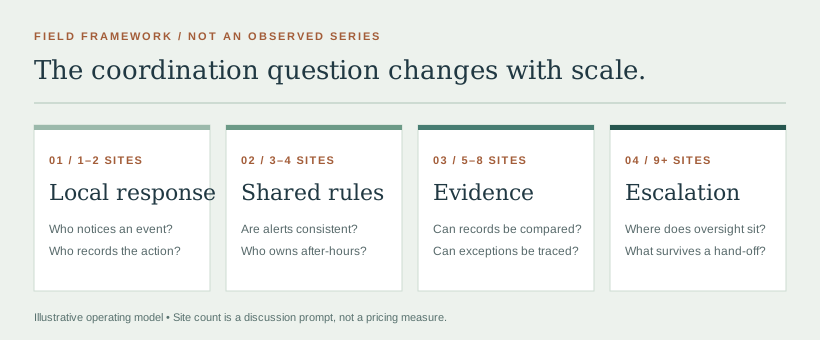
Illustration: relative coordination burden by site-count cohort. This is a qualitative framework, not an observed price series.
The cost is in exceptions, not readings
Temperature readings are cheap to collect. The harder costs sit in false alerts, escalation gaps and the effort to reconstruct an event for a customer or auditor. A credible solution narrative should connect sensors to operational ownership: what is flagged, what happens outside business hours, who can close an exception and how the record is exported.
There is no universal percentage of revenue that a cold-chain operator should spend on monitoring. Public facility counts and expansion news can inform a fit estimate, but they do not reveal an organisation's budget or procurement approval. A seller's own price book and approval rules remain the sources for actual commercial authority.
Constructing a reviewable commercial approach
A useful internal sales brief separates a public market signal from a proposed term. The analyst can identify a likely programme shape and a plausible negotiation issue while recording what remains unverified. The final offer still depends on the seller's scope, approved pricing and any required sign-off.
For a four-site operator, the most useful next discussion is often an implementation workshop: map the site types, the audit record needed by customers and the existing incident-response chain. That workshop can sharpen the bill of materials without treating an outside publication as proof of budget.
Lead Intel publishes independent market analysis. It does not speak for any prospect, verify a prospect's budget, or approve a supplier's commercial terms.